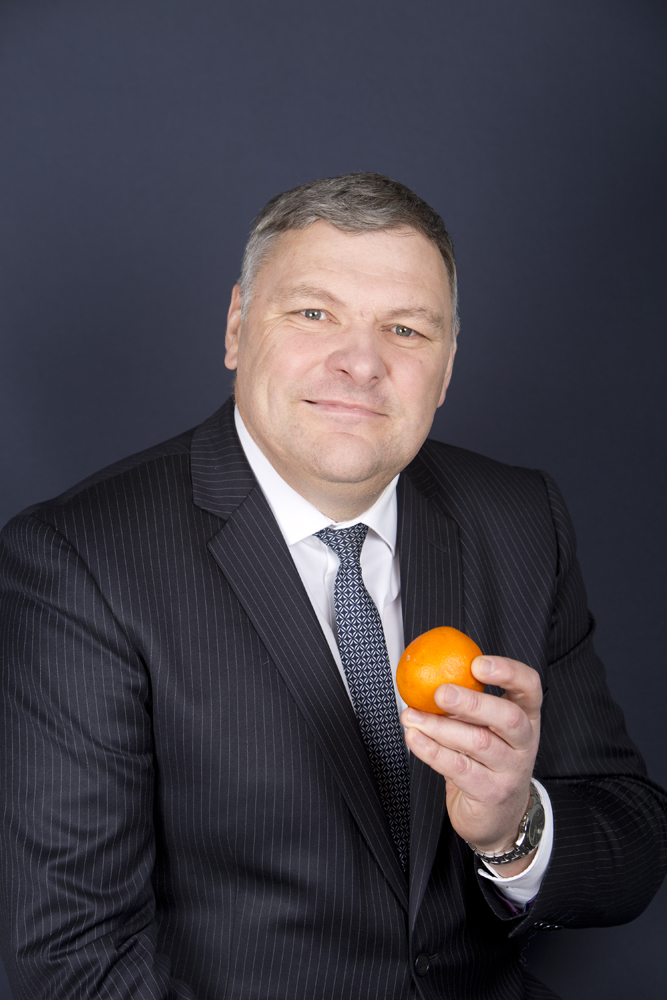
MARKO POMERANTS: A Tourism Destination by the Water Is Only Half the Battle
23.07.2026
, Põhjarannik
A destination by the sea: a challenge for developers or a unique opportunity? This was the question posed by Bartlomiej Barski, Head of Tourism for the City of Sopot, at the Narva-Jõesuu business conference this spring. Having the sea nearby is certainly an advantage for a tourism operator, as is having a lake the size of a sea. Ida-Viru County has both, with a border river connecting them.
But in our climate, this is obviously also a challenge for tourism businesses – both during the tourism season and throughout the year. In summer, the question is what to offer people when it rains or the weather suddenly turns chilly and a beach holiday is not exactly the most viable option.
I myself once optimistically booked flights in spring for a September trip to Tyrol, only to spend a week there in pouring rain and temperatures of three degrees Celsius. All the yodelling I had planned for the mountain slopes had to be cancelled.
If you can ski in Tyrol in winter, then we, too, have to think about how tourism businesses can survive the winter while actually earning some revenue. Waterside tourism is an important part of the blue economy and a source of income for maritime nations.
What Are the Biggest Challenges Facing Coastal Tourism in Estonia?
The biggest problem is the highly seasonal nature of tourism. An acquaintance of mine who runs accommodation in Haapsalu once said: “Once the White Lady Days in August are over, winter begins.”
In economic terms, seasonality means a need for seasonal labour and longer payback periods for investments. That workforce may not be local, simply because there are not enough people available locally. On Ruhnu, for example, I met two ladies serving visitors there who spend their winters in Lääne-Viru County.
All of this, in turn, affects pricing. There is simply no other way to provide the services. Spas, of course, provide opportunities for recreation all year round, although they, too, have their low seasons. It would actually be interesting to find out where Ida-Viru County ranks in the mind of an Estonian when they hear the word “spa”. Does it come before Pärnu and Saaremaa, or immediately after Rakvere? Those in the know are aware that spas are already here – and more are on the way.
To take advantage of everything the region has to offer, you generally need your own car. Public transport is not much help here. Better transport connections would benefit everyone, locals included. Perhaps one solution is to meet guests at the station and later take them back to catch their train or bus. Just as Lible used to take the sexton to the train and pick Toots up from it. How long cheap taxi services will remain available around Narva is probably anyone’s guess.
Limited accessibility can also mean that parents with small children and people with reduced mobility may find it far from easy to manage. The situation is improving, although a service provider’s understanding of accessibility and actual accessibility can be two quite different things. You may, for example, be able to reach the bed in a campsite cabin in a wheelchair, but not actually get into or out of the bed.
The balance between local communities and tourism also requires attention. Growth in tourism can cause dissatisfaction among local residents. After all, not every local resident is a tourism entrepreneur, nor is hospitality necessarily the first thing on their mind.
I remember a story from Käsmu years ago, where the owner of a homestay described how, whenever guests were expected and there was little prospect of peace and quiet beginning at 11 p.m., he would occasionally go over to the neighbours carrying what was left in a bottle of Vana Tallinn. So traffic noise and other noise, as well as pressure on local services, require good relations within the community. Some groups of visitors can be very loud indeed.
The unfortunate thing is that having a coastline is not a unique competitive advantage for Estonia. In the Baltic Sea region, Estonia competes with destinations such as Finland, Sweden, Latvia and Lithuania. Germans can even choose between two seas – the North Sea and the Baltic Sea.
How Can We Help Tourism Businesses Operating on the Coast?
From the perspective of entrepreneurs, it is important to reduce economic, administrative and infrastructural barriers. From the perspective of the blue economy as a sector, the central question is how to increase the economic impact of coastal tourism while preserving the natural values of Estonia’s coastline and the living environment of local communities.
Nature can be enjoyed at any time of year, whether the reason is birdwatching, fishing, simply going on a nature hike, photography, a screen-free Saturday or a mental-health Sunday. A book may need writing, a painting may need painting, and a doctoral thesis may need finishing. Remote work, for that matter, may simply need doing, and a change of surroundings might be exactly what the person doing it needs.
If one of the indicators used to measure Estonian tourism is the number of overnight stays, then at the recent Virumaa DMO nature tourism conference, “Nature Creates the Destination”, Signe Ohakas, the founder of Wanderlust Matkad, pointed out that even spending time in nature can apparently be done in a great hurry. When a programme lasts three hours, people ask whether the whole thing could not be done in two. So alongside extending the tourism season and increasing the number of overnight stays, we should also be talking about increasing the number of hours people spend in nature. Strange, perhaps, but it is an example from real life.
The development of small harbours is probably another subject that will never be finished. Small harbours are like the city of Tallinn – they are never destined to be completed. Or are they?
Public authorities can contribute by making procedures simpler and faster and by dealing only with matters that are genuinely necessary. This could include clearer guidance on applying for permits, shorter processing times, single points of contact for coordinating different permits, and better coordination between planning and environmental procedures.
Small businesses cannot achieve visibility in foreign markets on their own. Shared coastal and maritime tourism marketing platforms, regional visitor routes, and digital booking and information environments would all help.
The low season could also be used for education and training. But who exactly should be educated? Seasonal workers, local residents and, of course, tourism entrepreneurs themselves. The aim could be to strengthen the links between tourism businesses and different areas of the blue economy, such as fisheries, aquaculture, maritime activities, nature conservation and cultural heritage – or simply to think more deeply about what hospitality actually means.
Coastal tourism does not develop in a vacuum. The Ministry of Climate and the European Commission are currently working together on the project “Estonian Blue Economy Governance Plan 2027+”, which aims to update and strengthen public governance of Estonia’s blue economy sector.
Coastal Tourism Is an Important and Organic Part of the Blue Economy. It Needs the Government’s Attention.
Liis Elmik, Senior Economist at Swedbank, recently wrote here in Põhjarannik that tourism has gained momentum. The momentum in the tourism sector itself and the “momentum” in the headline of her article may perhaps be two different things. However, I agree with her on the following: “Success requires better international accessibility, consistent marketing in target markets and investment in the development of high-quality tourism services. The key question for the coming years is not merely growth in the number of tourists, but Estonia’s ability to offer tourism experiences with greater added value and to compete successfully with both neighbouring countries and other European destinations.”
So having a body of water nearby certainly helps, but ideas and consistency in developing your services may be even more important.
2587056